

We often picture design as a logical sequence: you choose the components, then you assemble them. In a design office, it is rarely that linear. You work with a function to deliver, an architecture to hold together, a volume and a weight not to exceed, and a host of constraints you balance as best you can. You lay out the system, you place the electronics, you optimize every millimeter.
The connector finds its place within that balance, sometimes early, sometimes much later. And there is a case many engineers know well: the architecture is settled, it works, but no off-the-shelf part allows everything to be connected cleanly within the space that remains and the system’s constraints.
And the connector is only one link in the chain. An electronic system must be designed, built, assembled, and qualified. More often than not, this chain is split across several suppliers: one delivers the connectors, another handles the cabling, a third the board, and the last one handles the testing. Each with its own process, point of contact, and lead times.
For the engineer running the project, the consequences soon add up:
- multiple points of contact to coordinate from one end of the chain to the other;
- lead times that pile up instead of overlapping;
- technical information that degrades at every handover between two trades;
- back-and-forth that multiplies at every interface.
The real question is then no longer “which connector should I choose?”, but “who can take charge of the whole, from the component through to the finished system?”.
What is changing today: a fully integrated capability
These skills, we have developed over the years, project after project. What is new is not knowing how to apply them, but bringing them together under one roof into a fully integrated capability, run by one and the same team, across the entire chain:
- connectors, both standard and custom;
- electrical and optical harnesses;
- sub-assemblies and mechanical integration;
- signal conversion and electronics;
- structural mechanics;
- in-house laboratory for tests and simulation.
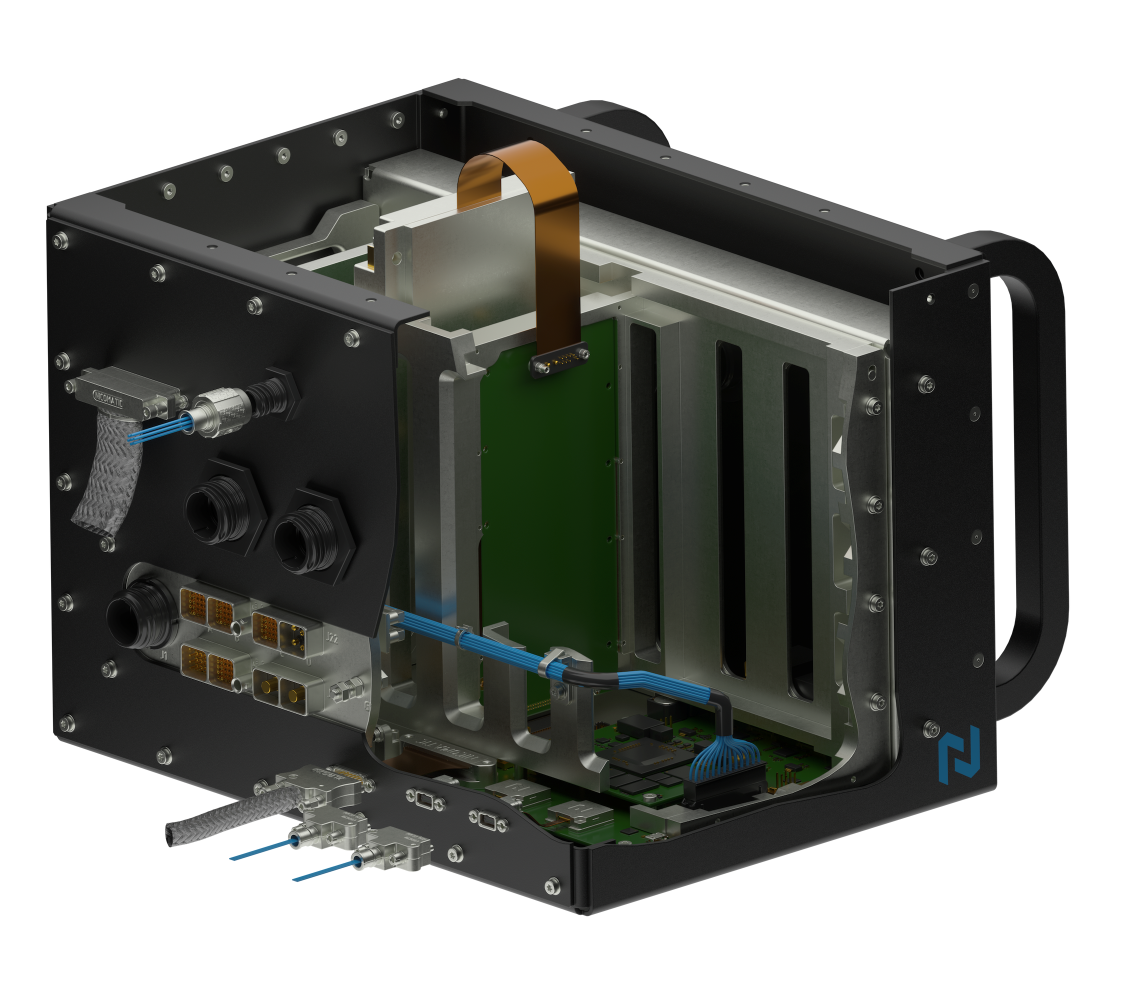
Assembled end-to-end, these capabilities let us design and manufacture fully custom systems in-house, from the first idea through to the finished product.
For your teams, the difference shows up on the project itself. What used to play out in the interfaces between suppliers now plays out in-house, under a single technical responsibility.
In concrete terms:
- no more trade-offs to settle between a cable assembler, a board manufacturer, and a laboratory that share neither the same schedule nor the same definition of the need;
- no more specifications to re-translate each time a batch passes from one trade to another, with the risk of loss that comes with it;
- a single technical file that follows the project, from the feasibility study through to manufacturing.
Because design, prototyping, testing, and manufacturing are carried out in a single EN9100-certified environment, the move from concept to manufacturing happens without any loss of technical information.
An ambition backed by dedicated resources
Structuring this offer also means providing an environment that meets its requirements. Assembling sensitive electronic sub-assemblies cannot be done in an ordinary workshop: control of electrostatic discharge (ESD) directly determines the reliability of the finished product. A production space has therefore been specifically set up and ESD-protected for this activity.
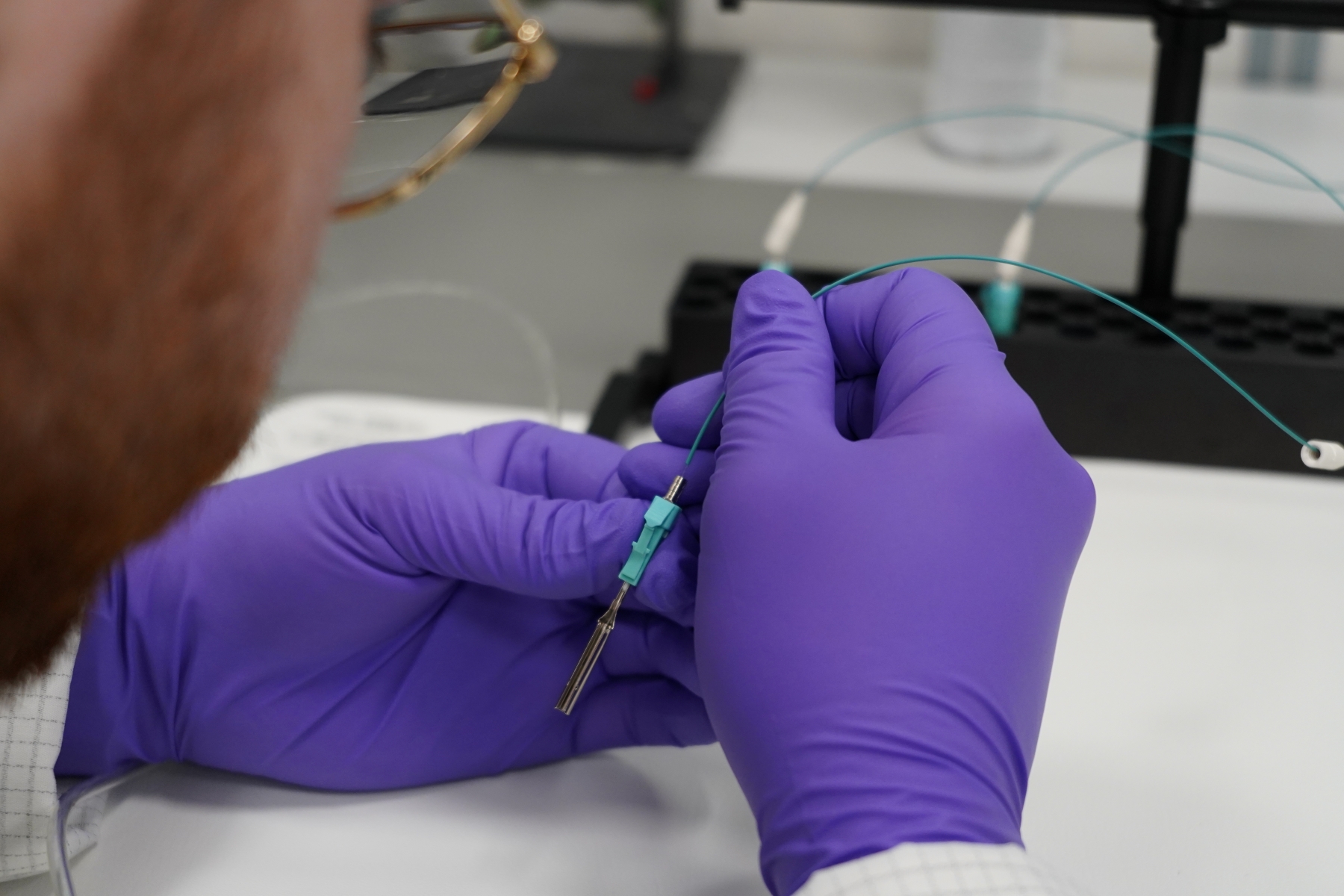
Whether you need a ready-to-integrate sub-assembly, a multi-technology harness, or a complete system to design from A to Z, the principle remains the same: our R&D teams work alongside you to turn your project into a custom-integrated system, from the feasibility study through to manufacturing.
An integrated system project?