


Whether it is the steering wheel controls of a car, a connected home automation unit, a portable medical device, or a simple remote control, one fact remains universal: users need clear tactile feedback.
Despite the omnipresence of fully touch-based systems and capacitive screens, the Human-Machine Interface (HMI) still very often requires flawless physical controls. Human beings look for immediate sensory confirmation to make sure their action has been registered, without having to look down at a screen. This is where the metal dome comes in.
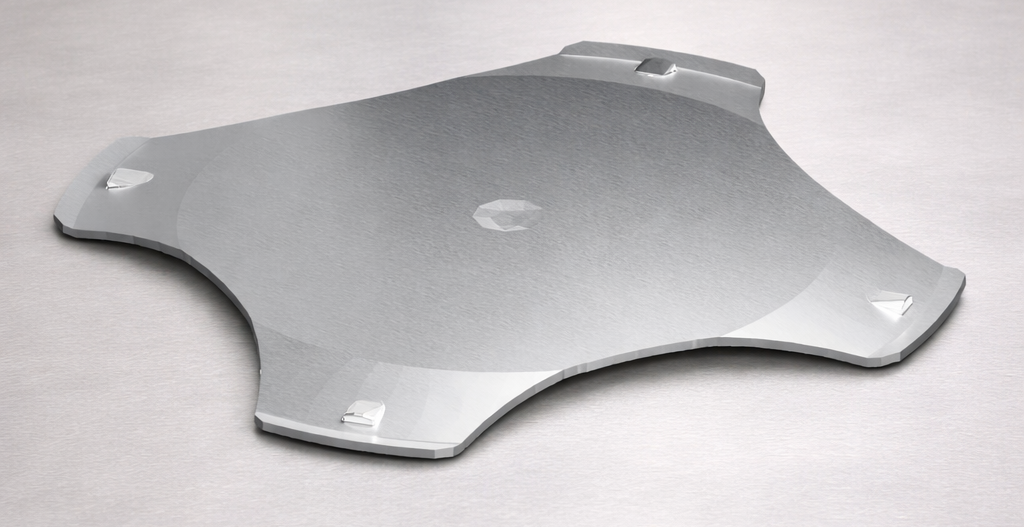
Yet integrating the perfect "click" brings major challenges, from user experience (UX) all the way to automated assembly on the production line. Here is how our tactile domes meet engineers' needs, whatever your application sector may be.
1. The UX challenge: Preventing fatigue and "ghost clicks"
Do your users sometimes press the same key twice because they cannot feel enough feedback?
A poorly sized tactile switch creates frustration and command errors.
The Nicomatic solution
Our metal domes are calibrated to deliver a constant and optimal tactile ratio, meaning a crisp and consistent click feel. The actuation force is guaranteed over millions of cycles. Users immediately know their action has been validated, ensuring a smooth and seamless experience.

2. The robustness challenge: Preserving click integrity over time
How can the same tactile feel be maintained after several million actuations, even in harsh environments?
Durability is often the weak point of interfaces. Conventional mechanical switches eventually develop play or become contaminated, while traditional membrane solutions lose their rebound capability due to wear or temperature variations.
The Nicomatic solution
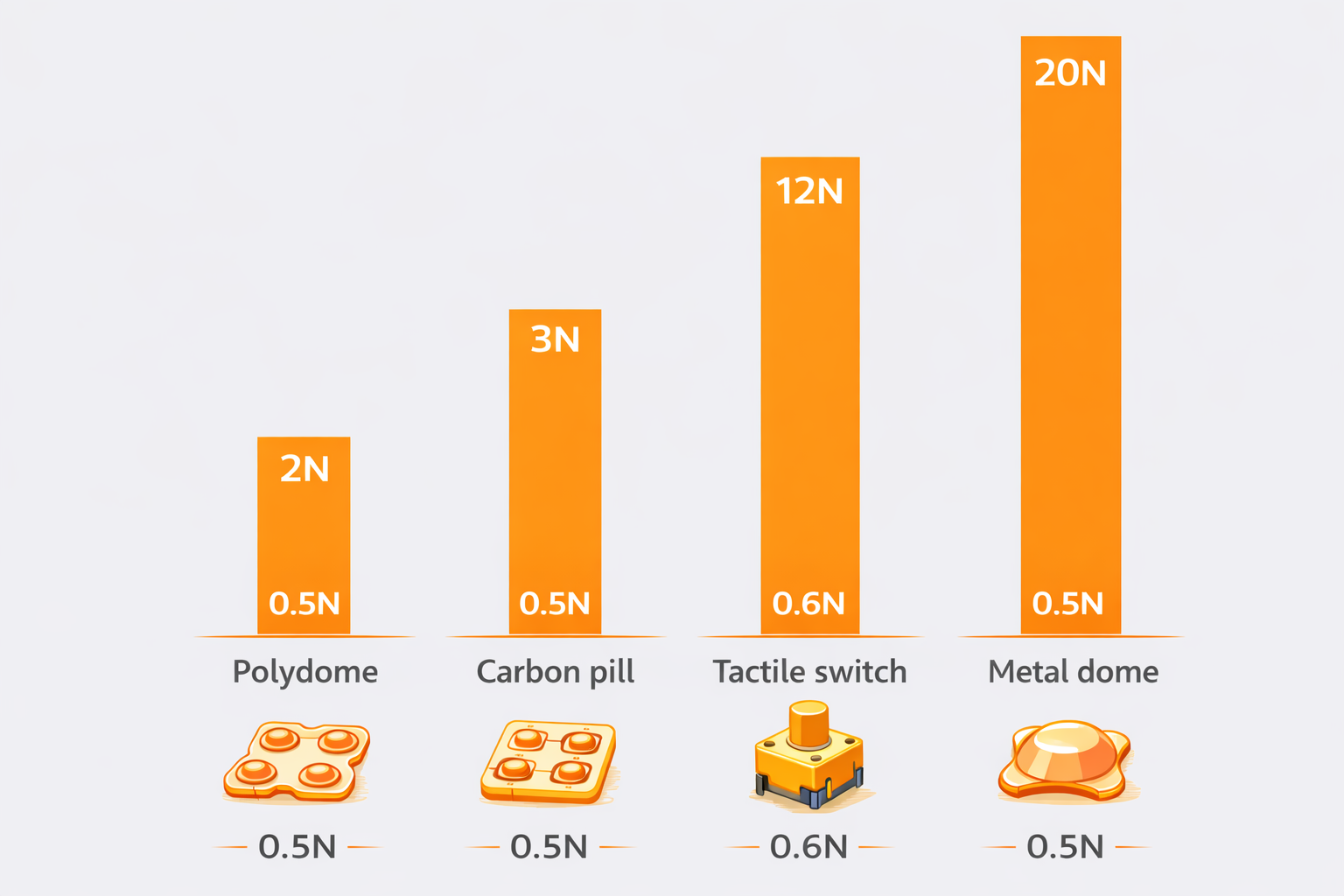
Our metal domes are designed to provide strong mechanical resilience. As illustrated in the graph above, this technology can withstand actuation forces of up to 20 Newtons, far exceeding the tolerance of polydomes. This exceptional pressure resistance ensures that the button will not fail, even under abrupt handling.
Thanks to a rigorous selection of high-performance stainless steels and a precision stamping process, we guarantee zero plastic deformation.
The result? A tactile ratio that remains constant from the first cycle to the millionth, whatever the thermal conditions. Beyond their ultra-low profile, which makes integration easier, it is their ability to maintain a sharp and crisp response over time that makes them the trusted solution for your critical systems.
3. The production challenge: The headache of stacked SMT domes
Do your Pick & Place machines stop because domes stick together?
This is a process engineer's nightmare: the "suction cup" effect during packaging, which causes two domes to be placed on top of each other.
The result? An unusable key with doubled force, or a permanent short circuit on the PCB.
The Nicomatic solution
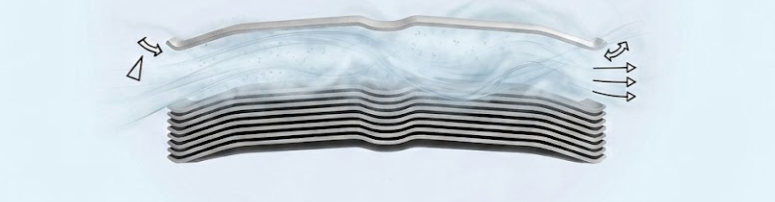
To secure your SMT component assembly lines, we developed the patented Switch'Air™ technology. This specific profile creates an air cushion between the parts, making them completely non-stackable. You ensure perfect single-part pick-up by your Pick & Place nozzles, eliminating quality defects and costly line stoppages.
The metal dome is not just a simple mechanical convenience. It is the vital interface between the user and your product, and a component that must also secure your production rates at the end of the manufacturing chain.
Find the perfect dome for your application.