

At the start of a project, choosing a connector can seem simple. You start from the specification, you pick the reference that ticks the boxes, you integrate it. Then the project moves forward and the requirements grow with it. Even the best-built specification evolves over the life of a program: a new version of the platform, a rising power level to handle, an extra data lane, an environment that gets harsher, an EMC (electromagnetic compatibility) or sealing requirement that moves up the priority list. Nothing abnormal about that: it is the very nature of programs that run over the long term.
The problem lies elsewhere. With a fixed catalog connector, every change in the requirement comes at a price: a new reference to qualify, sometimes a new supplier, a PCB footprint to rework, a qualification cycle to restart. The reflex is then to stack specialized connectors, or to over-spec as a precaution. Either way, you add mass, bill-of-materials lines and failure points.
What specifications really ask for
In the field, design teams' expectations converge on a single need: proven platforms that can adapt, rather than starting from scratch with every change. In practice, this translates into three recurring demands:
- Adapting recognized MIL/EN platforms to constantly evolving needs, without losing the benefits of their maturity.
- Broadening the range of possible configurations, so that the connector follows the project and not the other way around.
- Securing supply, with a local industrial alternative that reduces dependence on a single source.
The common thread is clear: fewer compromises imposed, more configurations under control.
Modularity: two dimensions that often get confused
When we talk about a modular connector, we actually blur two distinct ideas, and both matter.
The first is platform modularity: a single connector that transforms to adapt to different environments. The second is contact modularity: a single housing that accommodates different signal types. Nicomatic builds its DMM and CMM ranges on these two logics. Here is how.
Protection that transforms: the DMM connector
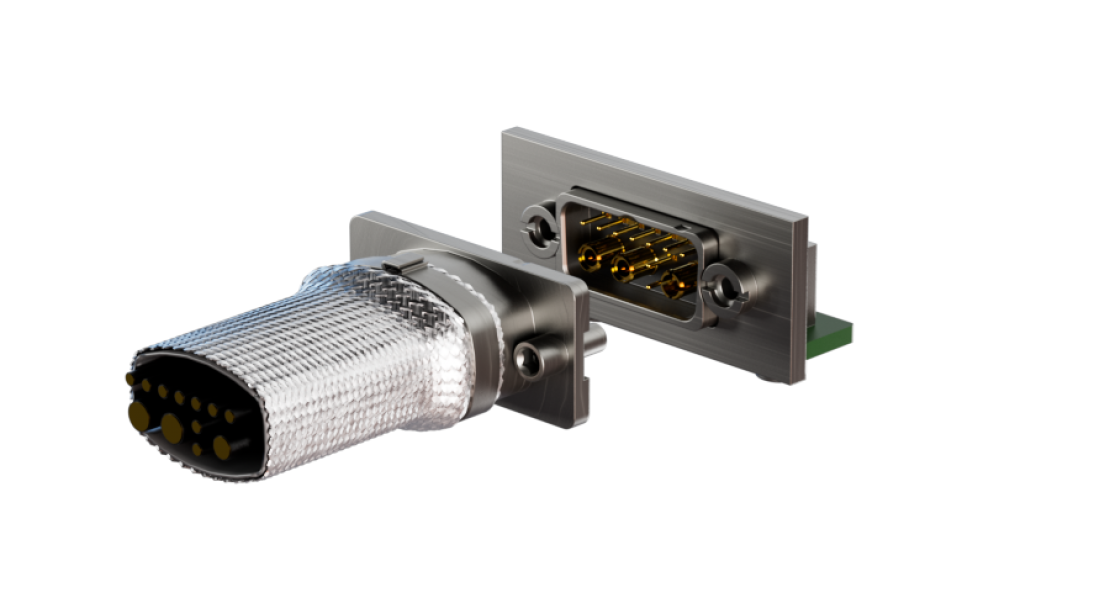
This is the idea captured in a simple phrase: connectors that transform to protect your system. The starting point is the DMM connector at 2 mm pitch, in aluminium, which exceeds the requirements of the MIL-DTL-83513G standard and falls under the new European EN4893 standard. A robust, high reliability base, dense (up to 4 rows of contacts), and already suited to harsh environments.
But the value does not lie in the base alone: it can receive modular building blocks as the constraints of your system appear. Without changing the layout logic, the same platform is declined:
- Against electromagnetic interference, with flange options and an EMI gasket delivering 360° protection for the most sensitive data transfers.
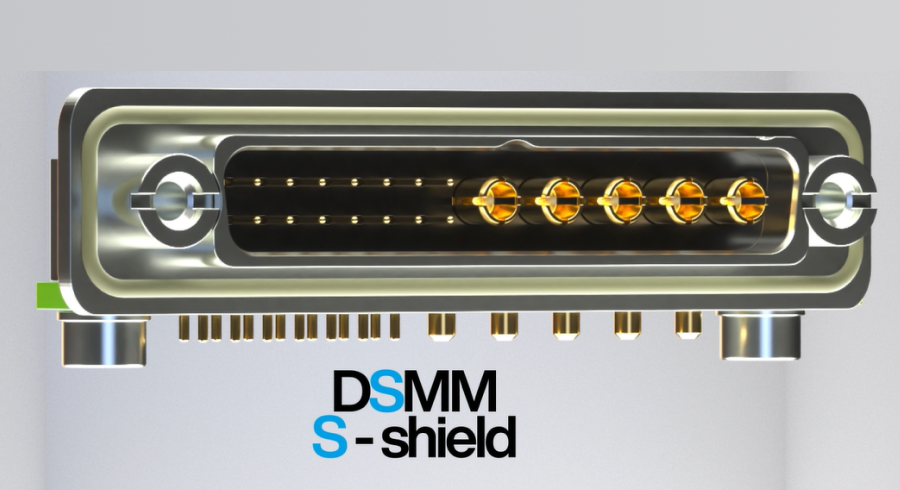
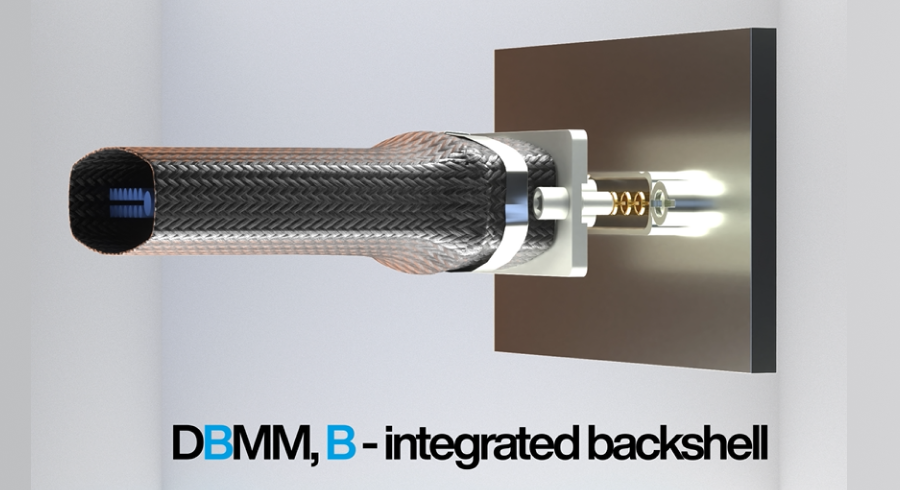
- Against mechanical stress, with backshells, up to a version that merges the connector and its backshell into an all-in-one solution, more compact, faster to install and more robust.
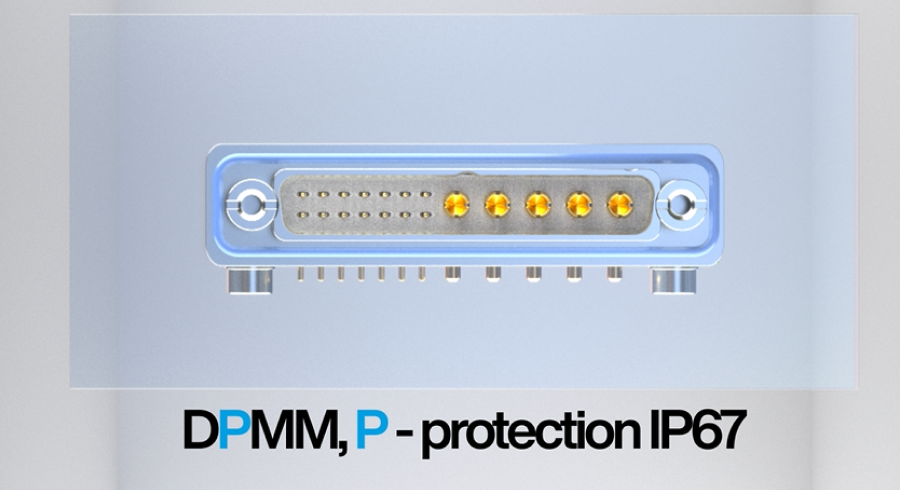
- Against water and dust, with a sealed, dust-tight version for the most exposed environments.
- Against extreme conditions, with hermetic variants.
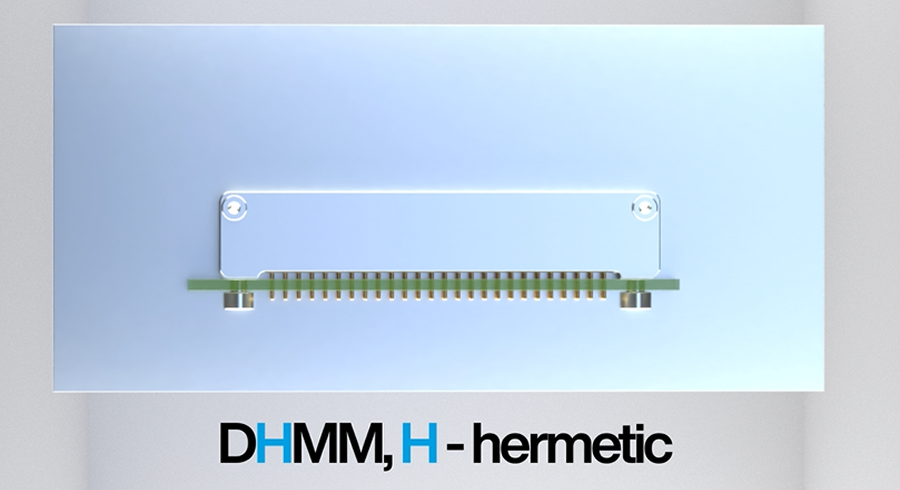
- For optical data, with fiber optic contacts that carry high-speed data while staying immune to electromagnetic interference.
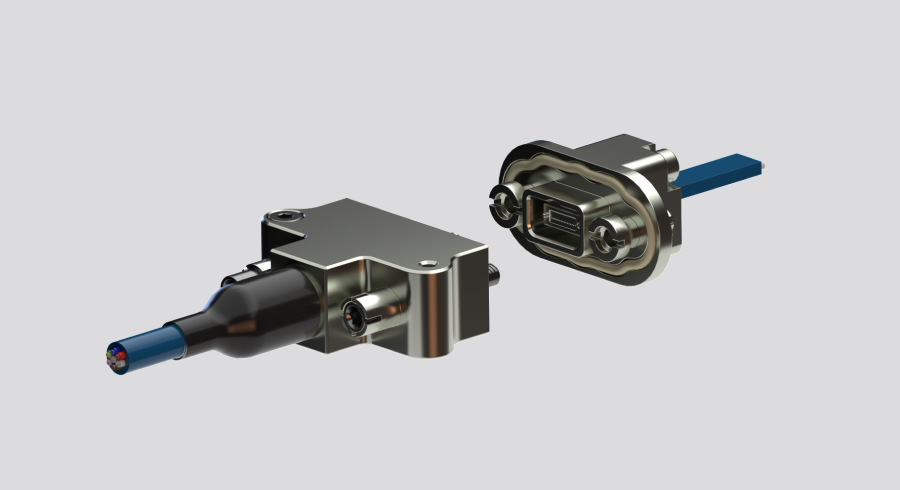
This is where modularity takes on its full meaning for an engineer: a new requirement no longer forces you to abandon an architecture that works. You start from a qualified platform and you equip it with exactly what you need: robustness, high density, EMC immunity, mechanical protection, sealing or hermeticity.
A single housing, several signal types: CMM contact modularity
The other dimension of modularity is not juxtaposing one connector per function, but bringing several signal types together in a single housing. This mixed-layout logic runs across several of our ranges, from the CMM to the DMM, by way of the EMM, Nicomatic's rugged micro-connector at 1.27 mm pitch.
The CMM connector, a 2 mm pitch micro-connector, is the one that pushes it furthest: it is the most modular of all, with a virtually unlimited number of configurations.
Its principle: freely mixing contacts of different types within a single housing. Signal, power and coaxial, brought together in one connector. These mixed layouts change the designer's daily work, because they replace several specialized connectors with a single interface: one keying to manage, one mating to qualify, one connection to assemble.
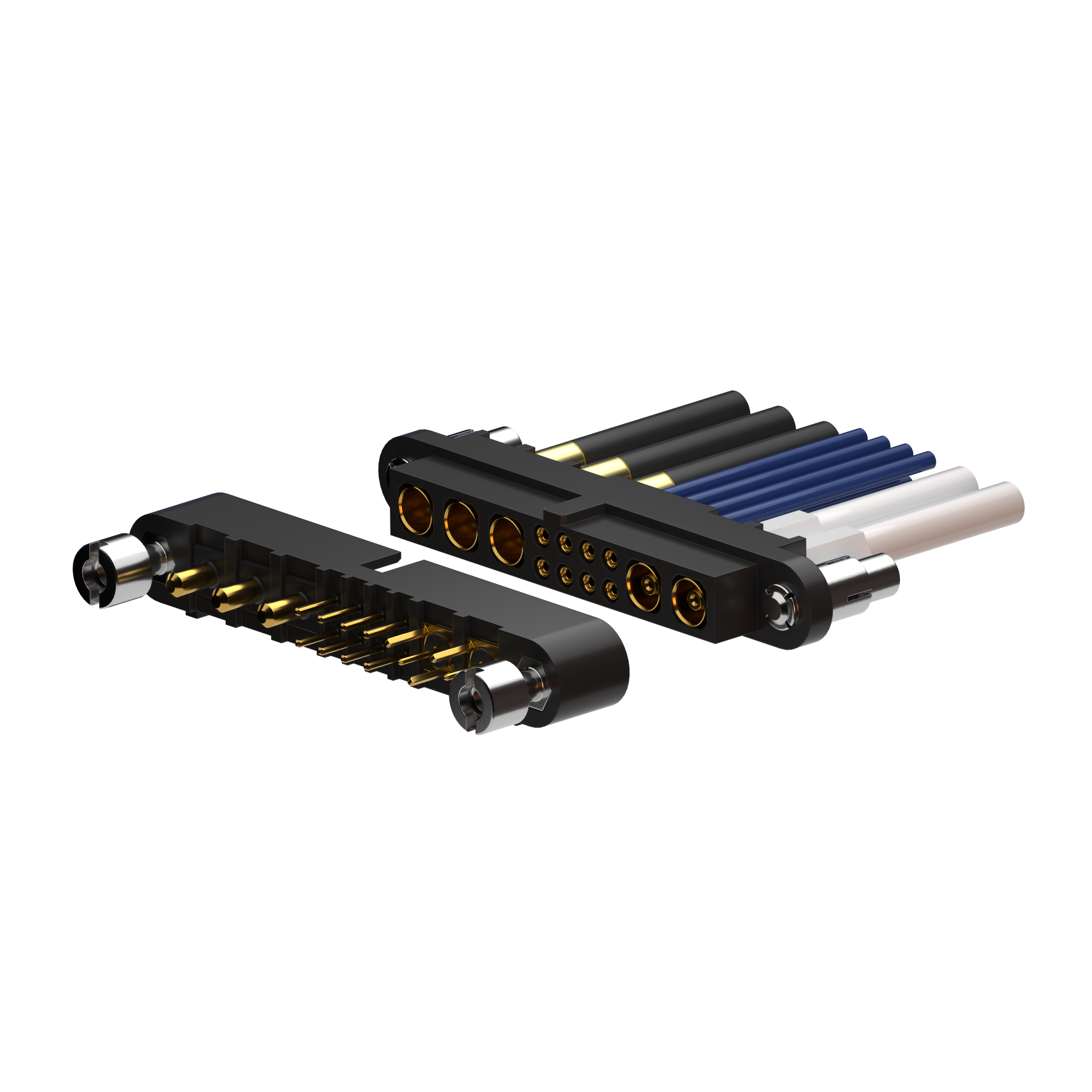
The range is organized into series that are consistent with one another, from ultra-compact versions (series 100 and 200) to the modular core with locking and combo coaxial and power layouts (series 220 and 320), up to the high density solution (series 340). And because power needs often climb during a project, scaling up happens within the same family: the HP30 high power contact delivers up to 30 A, in a 4 mm pitch configuration. The EMM connector applies the same mixed-layout logic in a more compact format.
All of this with no minimum order quantity and lead times starting at one week, from prototype to production.
Why modularity changes the game for your program
Thinking in terms of a modular platform, rather than a stack of specialized references, produces very concrete effects:
- A single platform to master, declined to suit your needs, rather than several connectors.
- A leaner bill of materials, with fewer references to manage and source.
- Progressive scaling, without having to start from scratch at every change in the specification.
- Secured supply, with a local manufacturing option that reduces dependence on a single source.
- Continuity from prototype to production, thanks to the absence of MOQ and short lead times.
Your system has its own constraints, and they will evolve. If you want to explore the configurations of a modular connector suited to your application, or have an architecture challenged by our engineers, Nicomatic is here for you.