

Every year, around 1.2 billion connectors are produced worldwide. By 2028, this figure is expected to reach 1.8 billion. Thousands of tons of petrochemical plastics are generated each year for connector insulators alone.
Even today, when designing an embedded system or an electronic board, a connector's environmental footprint is rarely the priority. This is largely due to the exponential market growth of the past 30 years, which has focused product design on performance with a view to optimizing margins, without taking environmental issues into account.
This observation calls for a paradigm shift today. Rethinking the way a connector is designed, from the very first stages of development, is becoming both a necessity and an opportunity.
Eco-Design in Passive Components
Eco-design is a comprehensive, systemic approach. "This approach involves integrating environmental protection from the design stage onward […]. Its goal is to reduce the environmental impact of products throughout their entire life cycle: raw material extraction, production, distribution, use, and end of life." Source: French Ministry for Ecological Transition
Beyond delivering environmental benefits, this approach also helps address key challenges of the 21st century, such as:
- The robustness of manufacturers and their products, remaining stable in the short term and viable in the long term in a fluctuating world,
- The sovereignty of our supply chains,
- The reindustrialization of our territories,
Contact materials: Mainly for machinability and forming reasons, lead is present in free-cutting brass alloys. The use of lead is problematic due to its toxicity (1.5 million deaths worldwide in 2021) Source: Health Data. Its gradual elimination requires the requalification of new alloys to meet the demanding specifications of our customers (defense, aerospace, aviation, medical).
Surface treatments: Certain critical metals such as gold and nickel, or hazardous substances such as cadmium, are used on contacts to improve their corrosion resistance and conductivity.
However, reserves of critical metals are shrinking exponentially due to strong demand from certain sectors (AI, electric vehicles, renewable energy…).
Hazardous substances, meanwhile, raise major public health concerns. Substituting these treatments or reducing their use while maintaining electrical performance is a genuine challenge.
Polymers: PPS, PBT, PTFE, fluorosilicones… Many of these materials are affected by evolving REACh and PFAS regulations. Precisely mapping each part reference's exposure to these constraints is essential groundwork to anticipate future bans and offer sustainable connectors with minimal impact on public health.
What Nicomatic Is Doing About It
We have launched several concrete initiatives:
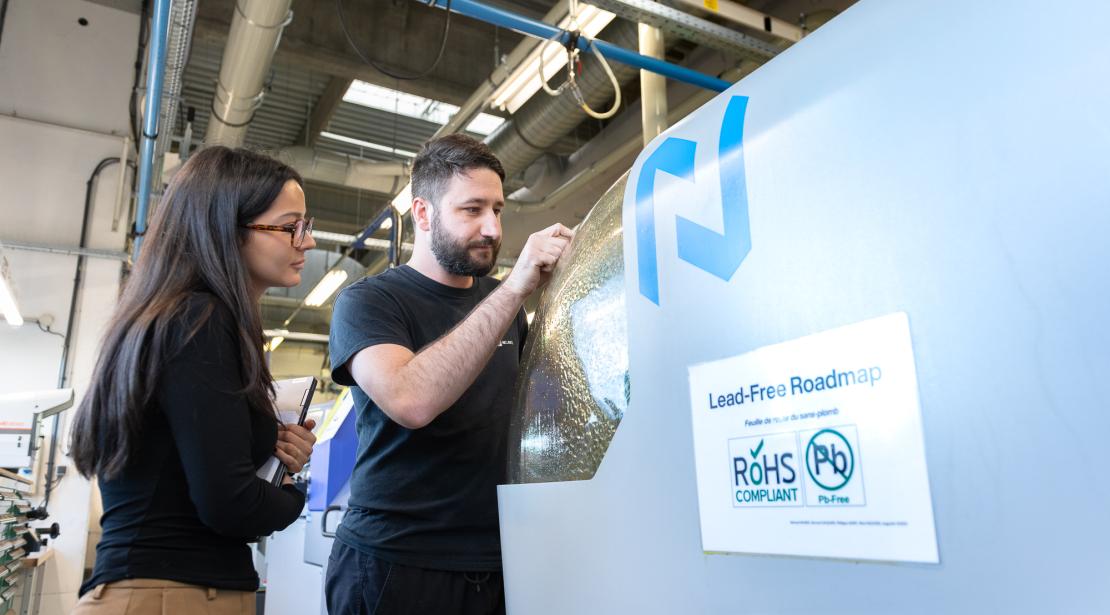
On contacts, we have been working since 2025 on qualifying lead-free machined brass contacts. A lead-free contact should be available in 2027. This type of development takes time, as behavior in severe environments (vibration, thermal shock, fretting resistance) must be validated before any market release in our application sectors.
On the topic of PFAS, a mapping of these "forever chemicals" in our polymers is underway. Discussions on alternatives have already begun. The goal: to anticipate upcoming European regulations banning the use of PFAS and to be able to offer innovative, high-performance alternatives that meet our customers' expectations.
On selective gold surface treatment, we are currently trialing this process on our machined contacts. The idea: deposit gold only where it is functionally needed, rather than across the entire contact surface. Material savings are significant at series scale.
On stamped-and-formed contacts — a manufacturing technology that uses less material than turned-machining — we are developing a male contact with a 1.27 mm pitch and a female contact with a 2 mm pitch. This process change reduces the volume of metal used (less waste: no machining chips).
Finally, in 2024 we launched the Nivora initiative, in partnership with Harwin, one of our UK-based competitors, and the innovative materials studio "The New Materialist." The goal is to develop a regenerative biomaterial capable of replacing the petroleum-based plastics used in connector insulators. This is an exploratory, cooperative, open program, aiming to create a material that regenerates both our natural environment and our local human environment (industry, job market…).
The first step: produce a functional prototype and explore potential uses for this new material.
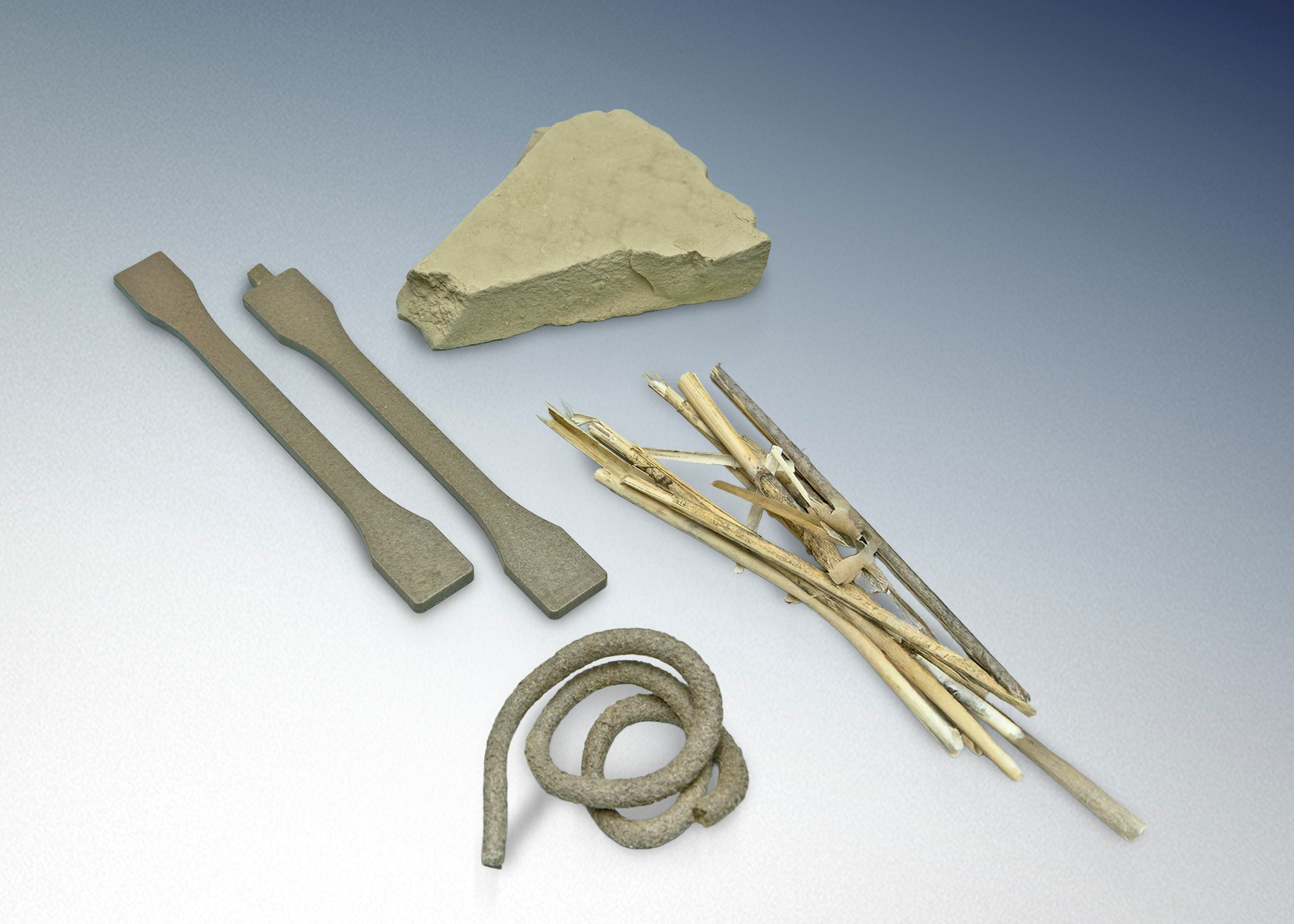
This year, our Nivora project won first prize at the 'G7 du territoire' (organised ahead of the G7 summit in France). This is a strong signal that validates our vision!
What This Means for Your Projects
If you're in the process of thinking through a new product, an innovation, a design, or an industrialization project, here are a few practical points to keep in mind:
Transparency on material traceability is becoming a key selection criterion. The CMRT (Conflict Minerals Reporting Template) and EMRT (Extended Minerals Reporting Template) are used to collect information on smelters and refineries. Requiring these documents from your component suppliers improves the traceability of at-risk metals within your systems and lets you rule out metal supplies coming from conflict zones or from smelters whose practices don't comply with international law (ethics, labor standards…).
Managing regulatory obsolescence is a real risk. A connector affected by a future PFAS restriction could force a complete requalification of your system. Choosing components free of hazardous substances, with regulated usage, secures your product development while reducing the risk of obsolescence.
Durability as a lever for robustness. A connector designed to last (repairable contacts, field-replaceable sub-assemblies, recyclable material) means a longer lifespan for your equipment, reduced environmental impact — and greater satisfaction for your own customers, while strengthening your brand image.
Eco-design is a genuine tool for anticipation. Regulatory constraints are evolving faster than qualification cycles, and a component validated today can become a bottleneck three years from now if eco-design hasn't been factored into your design choices.
Let's Move Forward Together
We are moving forward together to make eco-design standard practice across all of our solutions. In the severe environments where our products operate, robustness and durability have always been two sides of the same requirement. Environmental responsibility is no exception.