

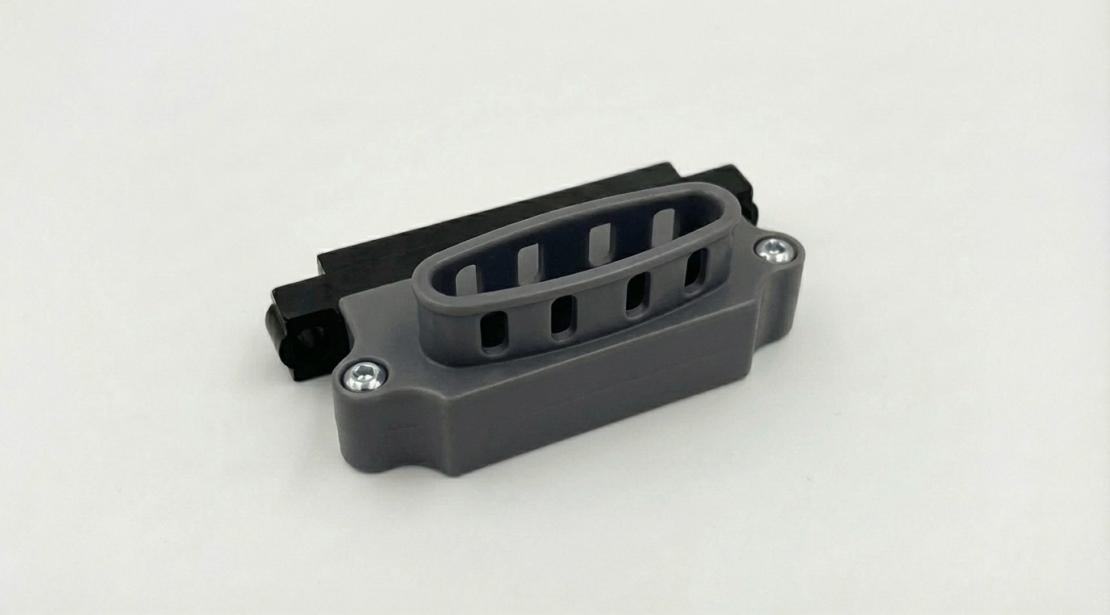
You may already know Nicomatic’s 3D printing capabilities through our protective caps or assembly support tools. Today, we are taking a step further by integrating additive manufacturing directly into the connector function itself.
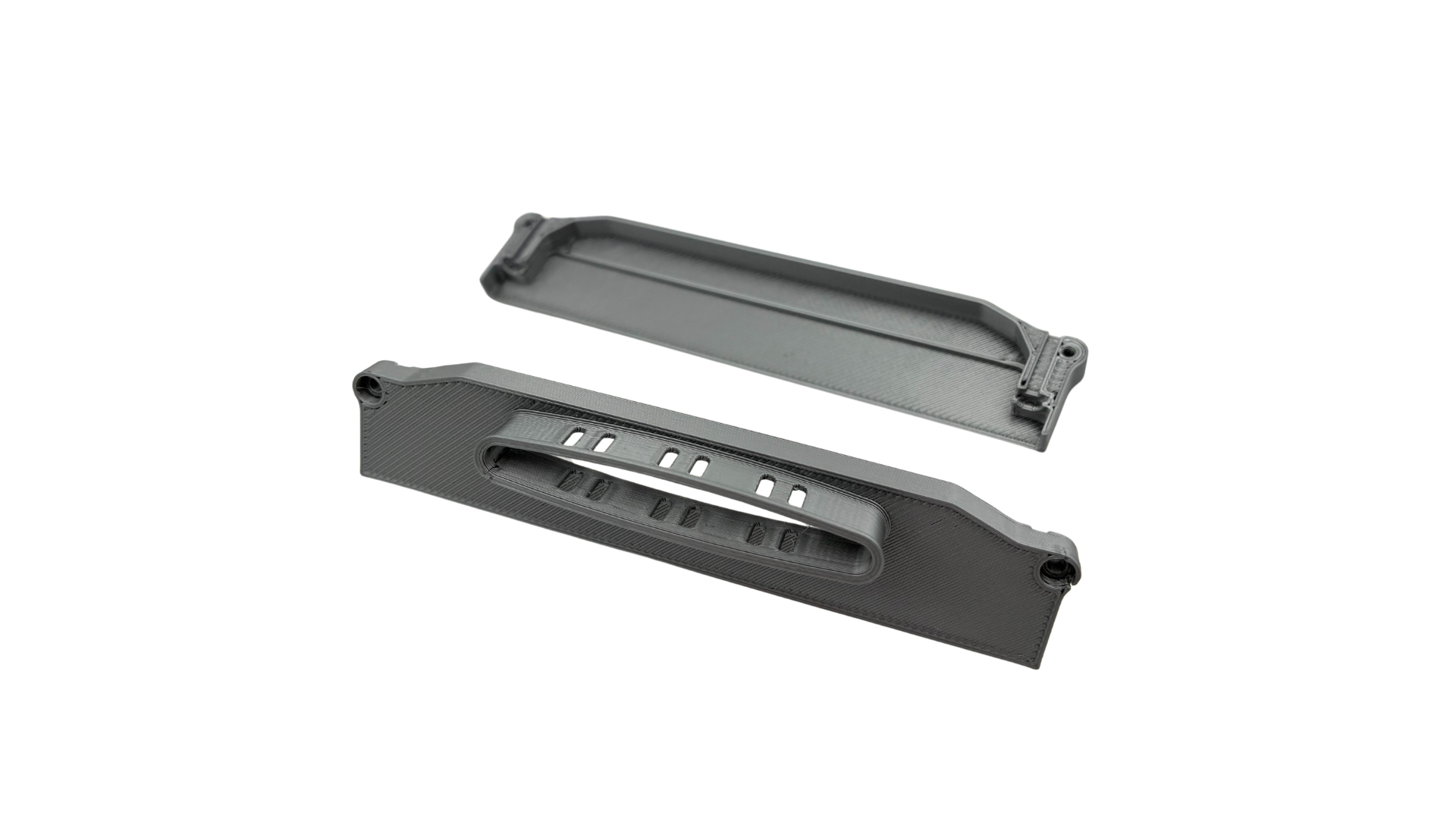
We now offer 3D-printed backshells, manufactured from a polymer material that combines robustness with flexibility.
Why consider this option instead of traditional aluminum? Here are the key elements to support your technical decision.
1. Design Freedom (Geometry & Cabling)
Machining has its limits. 3D printing removes them.
If your integration requires a 45° cable exit, an ultra-short bend, or an “exotic” geometry to avoid a mechanical obstacle inside the enclosure, a printed backshell becomes the ideal solution. We can design and manufacture complex geometries that perfectly match your space constraints without the prohibitive tooling costs typically associated with custom machining.
2. The Weight Advantage (SWaP)
Across a growing number of markets, weight control has become a key performance criterion. Every gram optimized contributes to improving overall system efficiency.
Replacing a metal backshell with a polymer version enables significant mass reduction at harness level, while maintaining excellent mechanical protection and effective strain relief thanks to the material’s flexibility.
3. The Decisive Criterion: EMI Shielding
Let’s be clear about the technology choice:
- If EMI shielding is critical: a metallic backshell remains essential.
- If your requirement is purely mechanical (guidance, protection, dust sealing): the 3D-printed backshell is a lighter, faster-to-produce, and equally durable alternative.
4. Beyond the Product: De-Risking Your Projects
This agility allows us to go beyond supplying a single component.
During the study phase, we can print your actual technical environment (chassis, surrounding obstacles) to validate connector integration under real conditions. Whether for rapid prototyping or production runs, this approach drastically reduces mechanical integration risks before launching final tooling.
A 3D-printed backshell is not a gadget, it is a lever for speed and mass optimization. It provides an immediate response to complex architectures where metal is not strictly required.