

For nearly 50 years, Nicomatic has been a company built on connections. Technical connections first: our solutions equip harsh environments, from defense to aerospace, from space to energy, from mobility and transport to medical. But also, and above all, human connections. As an independent, family-owned group, we rely on a network of more than 100,000 relationships, spread across 30 entities and 24 countries, centred on a historic French entity and our production sites.
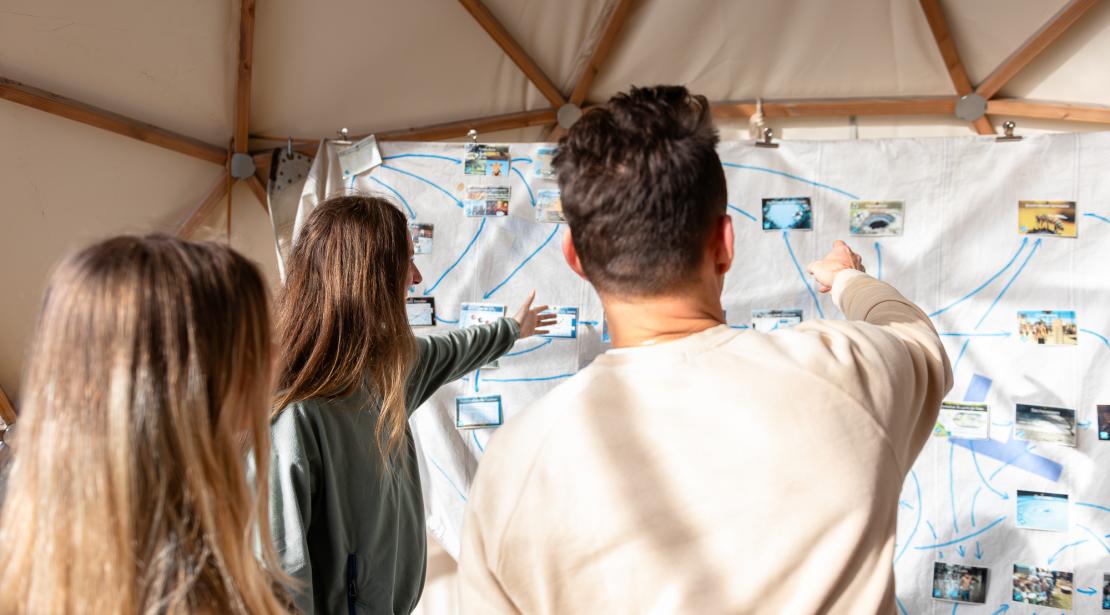
The turning point came in late 2023. After a nine-month journey with the Convention des Entreprises pour le Climat (CEC), the Convention of Companies for the Climate, challenged by the concepts of planetary boundaries and regeneration, we emerged with one conviction: the long-term viability of our industrial model depends on a profound transformation.
This conviction sparked a question that now influences our decisions: how can we design connection systems from more responsible materials, in cooperation with organisations close to us, while developing activities grounded in knowledge sharing? The answer lies in a single trajectory: Roadmap 2030.
One shared course, four levers
Roadmap 2030 sets a clear economic ambition: to reach €350 million in revenue by 2030, with 20% generated outside the sale of connectors, through services and knowledge sharing. But above all, it reflects a shift in logic: moving from short-term performance to sustainable performance, and from local optimisation to a systemic approach.
This trajectory unfolds along four levers: imagining more eco-responsible solutions, reducing our negative externalities by focusing on the essential, expanding our offering towards more services and cooperation, and evolving our management model.
Reducing our footprint: climate, materials, waste
We began by measuring, because you can only manage well what you understand. Our first carbon assessment (BEGES 2024, three scopes) stands at 35,421 tonnes of CO₂ equivalent. The lesson is clear: 96.8% of our emissions fall under Scope 3, and the purchase of products and services alone accounts for nearly 70% of them. In other words, most of our impact plays out upstream, in materials. That is where we are concentrating our efforts, with an ambition of 50% renewable and local energy in our mix and a structured transition plan built around the ACT approach.

On the resource front, the reality of our business is demanding: 98% of our incoming materials are critical: copper alloys, aluminium, technical plastics. Rather than simply enduring this, we are turning the constraint into a field for innovation: developing recycled materials and material loops (with a target of 40% recycled or bio-based materials in our systems by 2030), researching regenerative materials, and integrating eco-design from the drawing board through dedicated tools, such as our critical design analysis grid and our materials matrix, which helps our engineers select the most sustainable resources at the very moment of design.
Finally, we are working to turn our outgoing flows into resources. At our historic Bons-en-Chablais site, an industrial and territorial ecology initiative seeks synergies with neighbouring companies. And sometimes the best solution is simply common sense: in Abu Dhabi, our proximity to our main client enabled us to introduce a blister rotation, saving 5,000 pieces of packaging in a single year.
Putting people at the centre
Our performance rests on the quality of the relationships between people. Since 2012, we have chosen an "empowering company" model, founded on the conviction that, in a globalised industrial environment, individual autonomy is the most effective driver of competitiveness. At Nicomatic, "the one who does is the one who knows": decisions are made as close to the ground as possible.
This freedom comes with genuine attention to work-life balance. Each of our entities, according to its own culture, rolls out concrete measures: support for parenthood (a gradual return to work after maternity leave, time off for a child's medical appointments), dedicated initiatives for quality of life at work, or support for mobility: we measure our teams' home-to-work commutes, and some entities, such as Nicomatic India, offer their staff a free collective transport service.
In a high-risk sector such as metalworking, our accident severity rate remains particularly low: 0.1%, compared with 1.1% for the sector.
We also cultivate diversity as a source of strength and safety as a non-negotiable requirement. Finally, the Nicomatic Academy preserves our critical expertise, with nearly 13,000 hours of training delivered in 2025, now supplemented by modules dedicated to sustainability issues.
Building trust: ethics, responsible procurement, cybersecurity
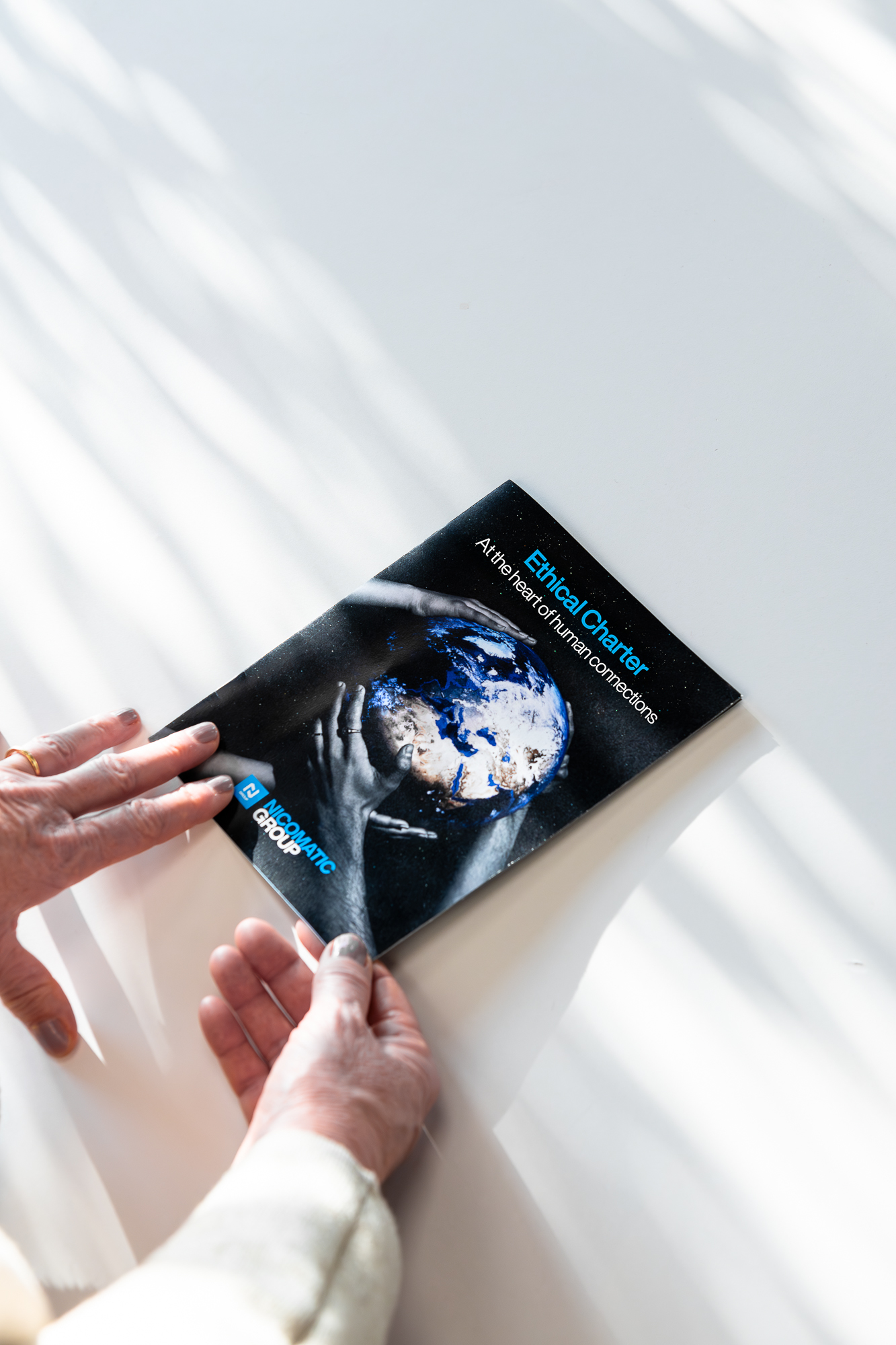
Operating in sensitive industries and a complex international context makes trust the cornerstone of every partnership. In 2024, we adopted an Ethics Charter, upheld by an Ethics Committee, structured around six cardinal values and binding our entire value chain.
This requirement extends to our supplier relationships. We guarantee responsible payment terms and actively monitor our partners' financial health. Since 2023, sustainability criteria have been built into the annual evaluation of our suppliers, carrying the same weight as the traditional criteria of quality, cost and delivery.
Trust also depends on protecting data, our own as well as our clients'. Our cybersecurity is progressively aligning with the NIS 2 directive and the ISO 27001 standard, and draws on the strength of our sector ecosystem (GIFAS member, AirCyber programme, Bronze certification in 2024). As some transitions exceed what any single player can carry alone, we are also moving forward through coopetition: the Nivora project, conducted with a competitor and a startup, aims to invent a regenerative, bio-based insulation for our industry.
Discover our article on eco-design to learn more about the Nivora project!
An owned trajectory, meant to be shared
We remain clear-eyed about the road still ahead. Our 2025 sustainability report is voluntary: it owns its areas of uncertainty as much as its progress. We have chosen transparency over diluted exhaustiveness because a credible approach is judged by its sincerity.
The new generation of the family sums up this conviction in its own way: "What we sell matters, but what really matters is how we do it, and with whom." That is the whole point of Roadmap 2030: making sustainability not a constraint to be managed, but a project to be shared with our entire ecosystem: clients, suppliers, partners and territories.